
Medical gas pipeline systems
A medical gas pipeline delivers oxygen to a patient through several hundred metres of copper and a dozen joints, and every one of those joints is a place where the wrong gas could reach the wrong outlet. It is installed to a standard, tested against that standard, and certified, in that order, without exception.
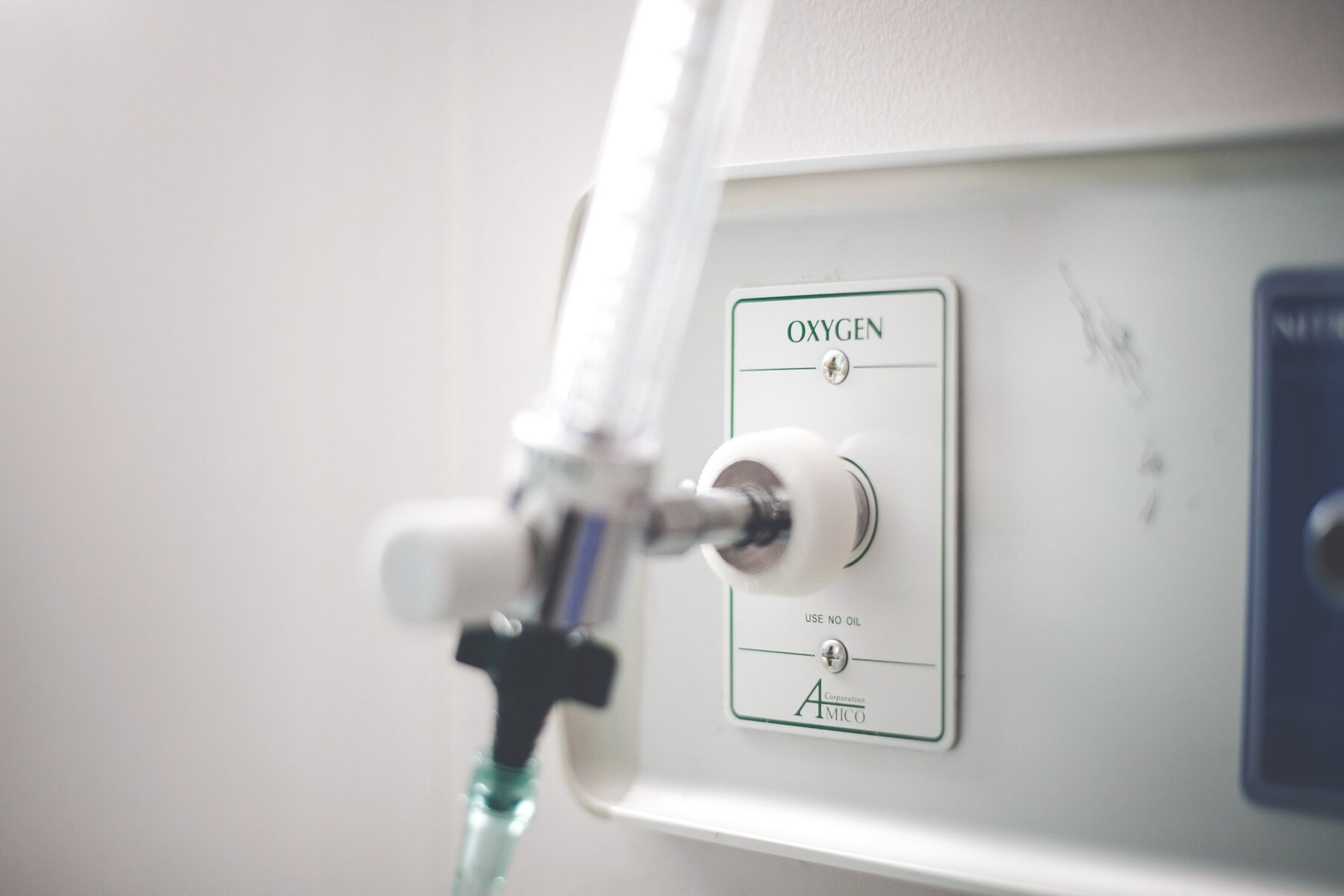
Gases and services
| Service | Typical pressure | Where it goes |
|---|---|---|
| Oxygen | 4 bar | ICU, theatre, wards, labour room, casualty, recovery |
| Nitrous oxide | 4 bar | Theatre, labour room |
| Medical air | 4 bar | ICU, neonatal, theatre, wards |
| Surgical air | 7 bar | Theatre, for powered instruments |
| Medical vacuum | 400 mm Hg minimum at the terminal | ICU, theatre, wards, labour room, casualty |
| Anaesthetic gas scavenging (AGSS) | - | Theatre, labour room |
| Carbon dioxide | 4 bar | Theatre, where laparoscopy requires it |
System components
- Source plant. Oxygen manifold with automatic changeover, or a PSA oxygen plant with cylinder
backup and liquid oxygen where the load justifies it. Nitrous oxide and carbon dioxide manifolds.
- Medical air plant. Duplex or triplex compressors, receivers, dryers, filtration and a quality
monitoring assembly. Air is generated, not bottled, and its quality is a plant responsibility.
- Vacuum plant. Duplex or triplex pumps, receiver, bacterial filtration and drainage.
- Distribution pipeline. Degreased medical grade copper to IS 7396 and EN 13348, brazed under
inert gas purge, sized for the diversified flow of every department it serves.
- Area valve service units. One per zone, so a ward can be isolated without shutting a floor.
- Alarm systems. Master alarm at the plant, area alarms at each zone, monitoring pressure and
plant status with audible and visual indication.
- Terminal units. Gas-specific, non-interchangeable, at every bed head, pendant and wall point.
- Bed head panels and pendants carrying the terminals alongside power, nurse call and lighting.
Standards
Design, installation and testing follow NFPA 99, HTM 02-01 and IS 7396, with copper tube to EN 13348. Brazing is carried out with an inert gas purge on the inside of the joint; a pipeline brazed without a purge carries oxide scale into the system and cannot be certified.
Testing and certification
No section of pipework is handed over on the basis that it looks correct.
1. Pressure and leak testing of the installed pipework, section by section. 2. Cross-connection testing at every single terminal unit, verifying that the gas emerging is the gas the outlet is labelled for. This is done at every outlet, without sampling. 3. Particulate and moisture testing to confirm the pipeline is clean and dry. 4. Purity and identity testing at the terminal, on each service. 5. Functional testing of every valve, alarm panel, non-return valve and area service unit. 6. Certification and as-built documentation, including a zone plan showing which valve isolates what, which is the document a hospital needs at three in the morning.
Maintenance
An MGPS is inspected annually: valves operated, alarms tested at every panel, terminal units checked for flow and pressure under load, non-return valves verified, and a leak survey carried out. Plant items run on their own intervals. Records are kept per zone.
This work sits inside the same maintenance contracts as the equipment that depends on the pipeline. A ventilator maintained to specification on a supply that drops below pressure at peak demand has not been made safe by the ventilator contract alone.
Questions about medical gas pipeline.
Not answered here? Call +91 98250 70790 and speak to someone who works on the equipment.
01Which gases does a hospital pipeline system carry?
Oxygen, nitrous oxide, medical air at 4 bar, surgical air at 7 bar, medical vacuum, and anaesthetic gas scavenging. Carbon dioxide and nitrous oxide–oxygen mixtures are added where the clinical services require them. Which services are piped and to where is set by the department schedule agreed at design stage.
02How is a new pipeline tested before use?
Pressure and leak testing, cross-connection testing on every outlet, particulate and moisture testing, purity and identity testing of the gas at the terminal unit, and functional testing of every valve, alarm and area service unit. Cross-connection testing is the one that matters most, because a crossed outlet is not detectable by anyone using it.
03Can a pipeline be extended while the hospital is running?
Yes, and most of our pipeline work is exactly that: a new ward, an ICU expansion, additional theatre outlets. The work is zoned using the existing area valve service units so only the affected zone is isolated, scheduled for low-occupancy windows, and the new section is fully tested and certified before it is opened to the live system.
04What maintenance does an MGPS need?
Annual inspection of the manifold and plant, valve operation, alarm testing at every panel, terminal unit flow and pressure checks, non-return valve testing, and leak survey. Plant items (compressors, vacuum pumps, dryers) follow their own service intervals. Records are kept per zone, which is what an assessor asks for.
ICU setup
Discuss your equipment
requirements.
Contract quotations follow a precise site inspection and equipment audit, not a phone call. Contact us to schedule an assessment.
Head Office
11 Vrundavan Park, Sec 22Gandhinagar 382021
Gujarat, India
Workshop
A-207, Sumel Safal-6Dudheswar, Ahmedabad 380004
Gujarat, India