
Installation, commissioning and relocation
Equipment fails early far more often because of how it was installed than because of how it was built. We check the site before the machine arrives, commission it against its own specification, train the people who will use it, and hand over the documentation the hospital will need for the rest of the machine's life.
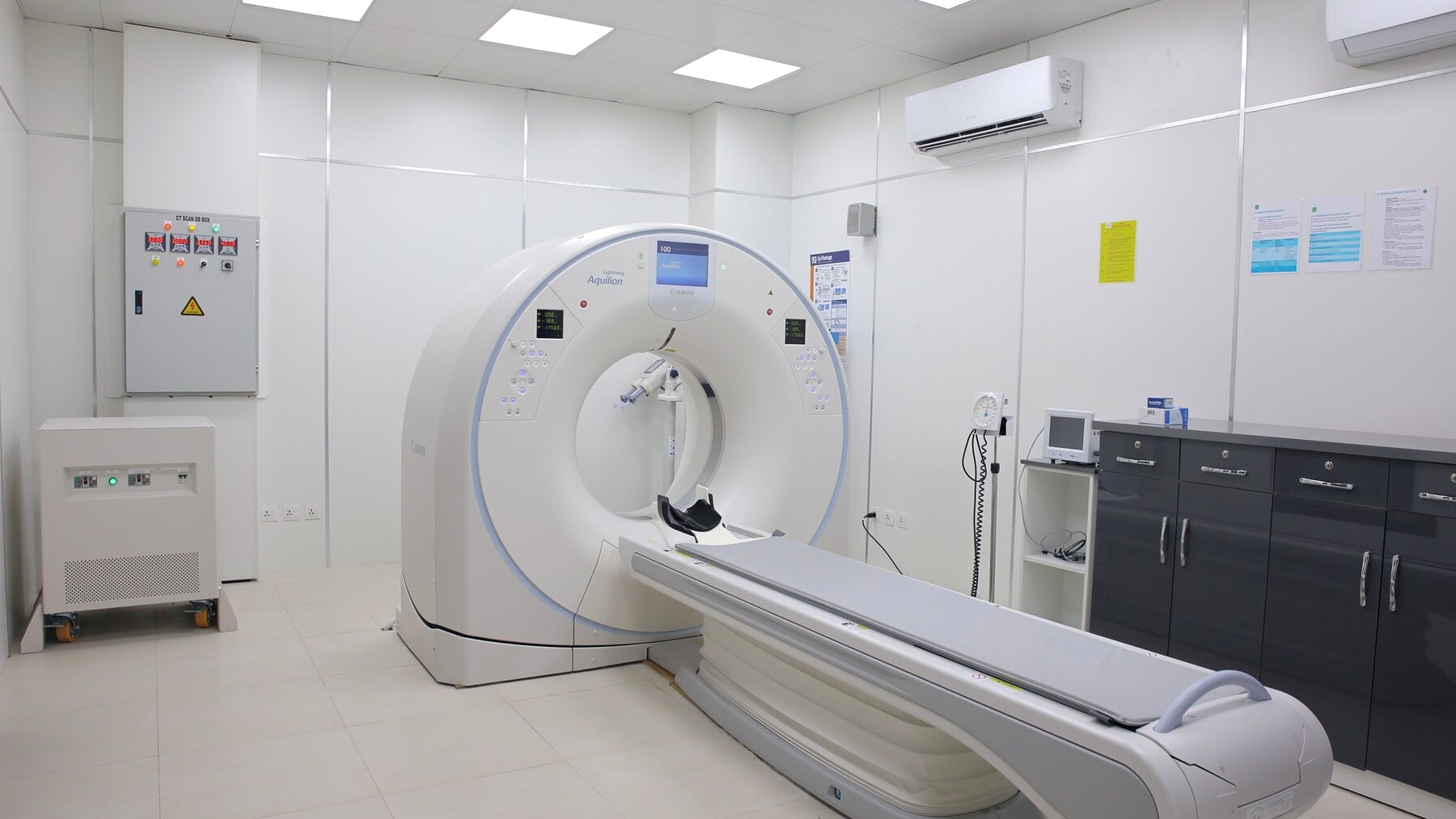
Installation and commissioning
Delivery is not installation, and installation is not commissioning. The three get treated as one event, which is where problems start.
Before delivery we survey the location: electrical supply and earthing, floor loading, door and lift dimensions on the route in, ambient temperature and ventilation, gas outlets and line pressures, drainage and water. You get the requirements in writing early enough to do something about them, rather than on the morning the crate arrives.
On installation the equipment is assembled, connected, levelled and secured, and every service it depends on is verified at the point of connection rather than assumed from the drawing.
On commissioning the machine is run against its own specification and the readings are recorded. Electrical safety is tested. Alarms are provoked and observed. Where the device measures or delivers a quantity, it is calibrated at this point, so its history starts from a known state.
On handover you get the commissioning record, the calibration certificate, the electrical safety test result, the warranty terms, the manuals, and a trained shift.
Relocation
Moving a working department is a sequencing problem, not a lifting problem.
We survey both locations, produce a move plan that keeps critical capacity available throughout, and work in the windows the hospital can actually give us: nights, weekends, between lists. Each machine is decommissioned, protected, moved, reinstalled and recommissioned as a unit, with its readings recorded again in the new location before it is handed back.
Equipment that has been moved is treated as newly installed. Transport shifts optics, disturbs hydraulics and loosens what vibration has been holding in place for years, and a machine that worked in the old theatre is not evidence that it works in the new one.
De-installation and disposal
Old equipment is disconnected safely from electrical and gas services, removed, and handed over for whichever route applies: buy-back against new purchase, transfer to another unit in the group or the district, or disposal.
Equipment being transferred rather than scrapped is tested and documented before it leaves. A receiving CHC should know whether the monitor it has been sent works, and too often nobody has checked.
Site requirements, in brief
| Requirement | Applies to |
|---|---|
| Stabilised supply, correct rating, verified earthing | Everything electrical, without exception |
| UPS or generator backing | Life support, imaging, blood bank, laboratory refrigeration |
| Floor loading and access route dimensions | CT, X-ray, autoclaves, OT tables |
| Ambient temperature and ventilation | Imaging, analysers, sterilisers, server-based systems |
| Medical gas outlets, correct line pressure | Ventilators, anaesthesia workstations, ICU and OT |
| Water supply and drainage | Autoclaves, washer-disinfectors, analysers |
| Radiation shielding and regulatory clearance | X-ray, mammography, CT, C-arm |
Where the room does not yet exist, this is where the work joins our turnkey infrastructure side: the same survey, done before the wall goes up rather than after.
Questions about installation & relocation.
Not answered here? Call +91 98250 70790 and speak to someone who works on the equipment.
01Do you install equipment bought from another supplier?
Yes, and a great deal of our installation work is exactly that. Many manufacturers sell into Gujarat without keeping engineers here. We install, commission and then maintain equipment we did not sell, which is how most of our long-term contracts started.
02How long does a department relocation take?
A single ICU or theatre is typically planned over two to three weeks and executed in two to four days, most of it outside working hours. The plan matters more than the lifting. We survey both the old and new locations, sequence the moves so critical capacity is never fully offline, and commission each machine in the new location before the next one is moved.
03What site preparation do you need before delivery?
It depends on the equipment, and we tell you in writing after the survey. Typically: a stable and correctly rated electrical supply with earthing, floor loading and access dimensions confirmed, ambient temperature and ventilation, medical gas outlets and pressures where required, drainage and water for sterilisers and analysers, and shielding for imaging.
04Do you handle de-installation and disposal of old equipment?
Yes. De-installation, safe disconnection from services, removal, and handover for buy-back, transfer to another unit, or disposal. Equipment being transferred to another institution is tested and documented before it leaves, so the receiving unit knows what it is getting.
05Is user training included?
Handover training for the nursing and technical staff on the shift is included in every installation. It covers routine operation, daily user checks, alarm response and what to do before calling for service. Repeat sessions for new staff are available and are written into most of our contracts.
AMC and CMC contracts: what each one covers
Discuss your equipment
requirements.
Contract quotations follow a precise site inspection and equipment audit, not a phone call. Contact us to schedule an assessment.
Head Office
11 Vrundavan Park, Sec 22Gandhinagar 382021
Gujarat, India
Workshop
A-207, Sumel Safal-6Dudheswar, Ahmedabad 380004
Gujarat, India